


Discover GEVEKO's new preformed signage



Road Signs
What is Road Signage?
Definition and Function
Traffic Signs are the set of signs, symbols and markings used to regulate traffic, improve safety and provide useful information to drivers and pedestrians. These signs are essential for ensuring proper traffic flow and preventing accidents. Signs play a crucial role in managing traffic flow by directing vehicles, regulating speed limits, and warning of impending hazards. Without proper signage, roads would become chaotic and dangerous, especially in high-traffic areas.
The main function of signs is to provide clear and timely information, making driving safer and more efficient. Traffic signs are designed to be visible in all weather and light conditions, ensuring that they are easily interpreted by anyone, regardless of the speed or type of vehicle being driven.
Types of Signage
There are different types of Road Signs, each with a specific role in traffic management and road safety:
Vertical Signs: Includes road signs mounted on vertical supports, such as prohibition, obligation, danger and indication signs.
Horizontal Signage: Includes roadway lines, directional arrows, crosswalks, and pavement markings.
Illuminated Signs: Consisting of illuminated signs, such as traffic lights and backlit signs for increased visibility at night or in low visibility conditions.
Temporary or Construction Site Signs: Used in temporary situations, such as road construction sites, to warn drivers of traffic changes or to ensure worker safety.
Each type of signage has a specific function and, when properly installed, helps improve road safety by reducing the risk of accidents and fluidizing traffic flows.
Road Signage Products
Vertical Signage
Vertical Signage is perhaps the most recognizable of the road sign types. It includes signs installed on vertical supports that inform, warn, and regulate traffic. Vertical signs are strategically placed along roads, highways, and in urban areas to ensure maximum visibility. The main vertical signs include:
Prohibition Signs: Like the No Parking or No Entry signs, these signs regulate vehicle access and parking in certain areas, ensuring road order and safety.
Obligation Signs: Like the Obligation to Turn sign, they direct drivers to mandatory behaviors to ensure compliance with traffic rules.
Danger Signs: Signs that warn of possible hazards along the road, such as dangerous curves, crosswalks or slippery roads.
Indication Signs: They provide useful driving information, such as directions to locations, mileage distances or highway exits.
Vertical signs must comply with national and European road safety regulations, ensuring that they are easily readable and understandable by all road users.
Horizontal Signage
Horizontal Signage includes all visual markings applied directly to the road surface. These markings are essential for guiding the flow of traffic and ensuring safety, particularly in heavy traffic situations or on high-speed roads. Some examples of horizontal signs include:
Roadway Lines: The continuous, dashed lines that separate lanes and regulate the passage of vehicles.
Directional Arrows: Painted markings on the road that signal to vehicles the mandatory direction to follow.
Pedestrian Strips: The areas marked for safe pedestrian crossing.
Sound Bands: Signs that warn drivers of hazards or speed reductions through vibrations felt while driving.
Road markings have the advantage of being clearly visible while driving, even at night or in adverse weather conditions, especially when they are made of reflective materials or high-quality paints.
Illuminated Signage
Illuminated Signs are critical for ensuring road safety in low-light conditions, such as during nighttime or adverse weather situations. Because of their visibility, illuminated signs help prevent accidents and manage traffic efficiently. The main luminous signal devices include:
Traffic lights: They regulate vehicular and pedestrian flows at intersections, ensuring that traffic moves in an orderly and safe manner.
Backlit Signs: Used mainly in urban or high-traffic areas, backlit signs ensure greater visibility even from long distances.
Bright LED Signs: These more modern and energy-efficient signs provide a durable and visible solution even in foggy or rainy conditions. Examples include the LED traffic signs and warning devices for high hazard areas.
Variable Message Panels: Used on highways and bypasses, they provide real-time information to drivers, such as speed limits or emergency warnings.
Illuminated signs are particularly effective for increasing visibility and safety in critical situations, such as intersections, school zones, and areas of high traffic density.
Preformed Signage
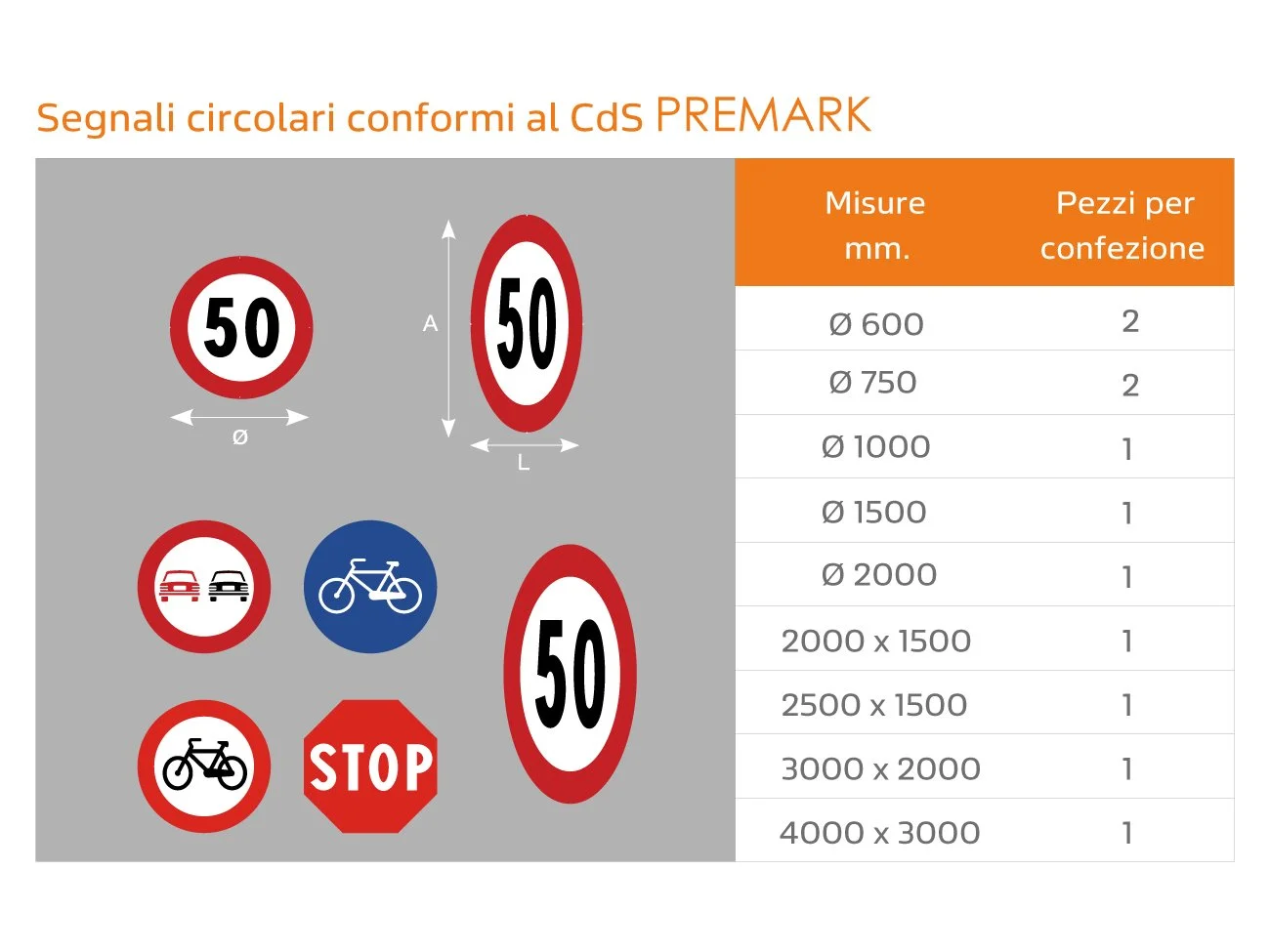
Preformed Signage is an innovative solution for quick and durable installations. These are signs made from materials such as thermoplastic, which is applied directly to the road surface through a heating process. This type of signage offers numerous advantages, including:
Durability: The preformed signage is resistant to traffic wear and weather conditions, ensuring a long service life.
Ease of Installation: It is applied quickly and easily, reducing road closure time and minimizing traffic impact.
Visibility: Through the use of reflective materials, the preformed signs are highly visible both during the day and at night, improving road safety.
This solution is ideal for horizontal traffic signs such as crosswalks, directional arrows and roadway lines, offering professional and high-quality results.
Construction Site Signage
Construction Site Signage is essential to ensure the safety of both workers and road users. It is used to signal temporary traffic changes or dangerous conditions in construction site areas. Temporary signs may include:
Cones and Barriers: Used to demarcate work areas and direct traffic away from hazardous areas.
Temporary Signs: Such as signs of work in progress or reduced speed limits, warning drivers of changes in the roadway or temporary restrictions.
Mobile Traffic Lights: Used to regulate traffic on alternating one-way roads during construction.
Reflective Signage: Ensures that signs are visible even in low-light conditions.
The proper installation of construction site signs is critical to preventing accidents and ensuring the safety of workers and motorists.
Barricades and Security Barriers
Transitions and Safety Barriers are used to control traffic flows and protect pedestrians, especially in high-risk areas such as dangerous intersections, public events, or construction sites. The main types of barriers include:
Modular Barricades: Easy to assemble and disassemble, ideal for events or temporary construction sites.
New Jersey Barriers: Made of concrete or plastic, they are used to separate roadways and protect road work areas.
Bollard Barriers: They protect pedestrians near busy roads, reducing the risk of accidents.
These safety elements not only regulate traffic, but also provide physical protection in emergency situations or road works.
Advantages of Road Signage
Improving Security
The main benefit of Road Signs is its contribution to the safety of all road users, including motorists, pedestrians and cyclists. Signs such as danger, obligation, and prohibition signs play a key role in preventing traffic accidents by warning drivers of impending dangers or regulating traffic so as to avoid hazardous situations.
For example, give-way or stop signs force drivers to slow down and stop at intersections, thus reducing the likelihood of collisions. Traffic signs also help maintain order on busy roads, improving traffic flow and reducing chaos, especially in urban areas with high vehicle density.
Traffic Regulation
Traffic regulation is another key benefit offered by traffic signs. In complex environments such as modern cities, where traffic can be chaotic, well-placed traffic signals help organize the flow of vehicles, preventing traffic jams and reducing travel times. Signs such as directional arrows and traffic lights ensure that traffic flows in an orderly and safe manner, preventing vehicles from getting in each other's way.
Pavement markings, such as roadway lines and crosswalks, play a crucial role in maintaining order on roads, indicating direction and separating different types of traffic. In addition, on highways and freeways, variable message signs provide real-time updates on road conditions, work in progress or temporary speed limits, further improving traffic management.
Rapid Installation and Durability
One of the most valued features of modern signage is its ease of installation and long service life. Products such as preformed signage, made of materials such as thermoplastic, offer a quick and practical solution for installing pavement markings without having to interrupt traffic for long periods. These products are designed to withstand the wear and tear of time and weathering, providing greater durability than traditional solutions.
Durability is especially crucial for signage on heavily traveled roads, where signs must remain visible and functional over time, even in adverse weather conditions. To ensure maximum efficiency and safety, it is crucial to choose high-quality materials and innovative technologies for road signs.
Who Buys Road Signs?
Public Administrations
Public Administrations, such as municipalities, provinces and regions, are among the main buyers of road signs. Their task is to ensure the safety of urban and suburban roads, improving traffic flow and reducing the risk of accidents. Signs are purchased and installed according to criteria defined by national and European regulations, with a focus on the safety of pedestrians and cyclists.
Construction Companies
Construction Companies are equally involved in the purchase of road signs, especially when it comes to managing temporary or long-term construction sites. During the construction of road infrastructure, construction companies must install temporary signs to regulate traffic and ensure the safety of workers and road users.
The types of signage most commonly used by construction companies include:
Work in Progress signs and temporary speed limits essential to signal changes in traffic flow during construction.
Barriers and barriers marking the construction site area and separating vehicular traffic from the work area.
Temporary Horizontal Signage to redesign lanes or indicate mandatory detours.
Managing safety on construction sites is a top priority for construction companies, and choosing durable, regulatory-compliant signage products is critical to ensuring safe and risk-free work.
Private Companies and Parking
Many Private Companies, particularly those that manage large parking lots or commercial areas, require traffic signs to organize and manage the flow of vehicles within their properties.
For private companies, signage not only makes it easier to organize spaces, but also helps improve the safety of customers and staff, reducing the risk of accidents and optimizing traffic flows.
How to Choose the Appropriate Road Signage
Materials and Resistance
Choosing the appropriate road signs involves the evaluation of several factors, including the material from which they are made. The durability of the signage is critical, especially in settings exposed to adverse weather conditions, heavy traffic or areas subject to constant wear and tear. The most commonly used materials include:
Aluminum: Very resistant to corrosion, aluminum is often used for vertical road signs because it provides durability even in harsh weather conditions.
Thermoplastic: Used for preformed road markings, this material is highly wear-resistant and retains its visibility even after prolonged use.
Reinforced Plastic: Ideal for temporary barriers and bollards, it is lightweight yet impact and weather resistant.
Choosing the right material depends on the environment in which the signage will be installed and the specific use to which it will be put. For example, for high-traffic roads, it is essential to opt for high-quality, durable materials that will not require frequent replacement.
Standards and Compliance
Another crucial factor in choosing signage is compliance with current regulations. Road signs must comply with specific standards to ensure safety and effectiveness. In Italy, the Highway Code regulates in detail the installation and characteristics of road signs, including colors, dimensions and symbology.
In addition, it is important to take into account European regulations, which set technical standards for road signs within the European Union. Compliance with these regulations ensures that signs are uniform and recognizable throughout Europe, improving driver safety, especially for those who frequently travel between different countries.
Verifying that products are certified and comply with these regulations is essential to avoid penalties and ensure proper and safe installation.
Conclusions
Importance of Effective Road Signage
Effective traffic signs are essential to ensure safe and smooth traffic flow, reducing the risk of accidents and improving the driving experience for all road users. By adopting innovative technologies, such as LED lighted signs and durable materials such as thermoplastic, durable and highly visible solutions can be achieved in all conditions.
For road sign buyers, whether government, construction companies or private companies, choosing quality products is critical to ensure compliance with regulations and the safety of motorists and pedestrians. Investing in well-designed and durable signage not only improves safety, but also reduces long-term maintenance costs.